Currency accounts and transfers in German banks — how to open an account, transfer, and invest currency
Germany has one of the most stable and reliable banking systems in Europe. For tourists, immigrants, and foreigners who come here to work or study, it is important to understand how banks work with currency: where to open an account, how to transfer money, and what options exist for keeping money in foreign currency.
German banking system: a short overview
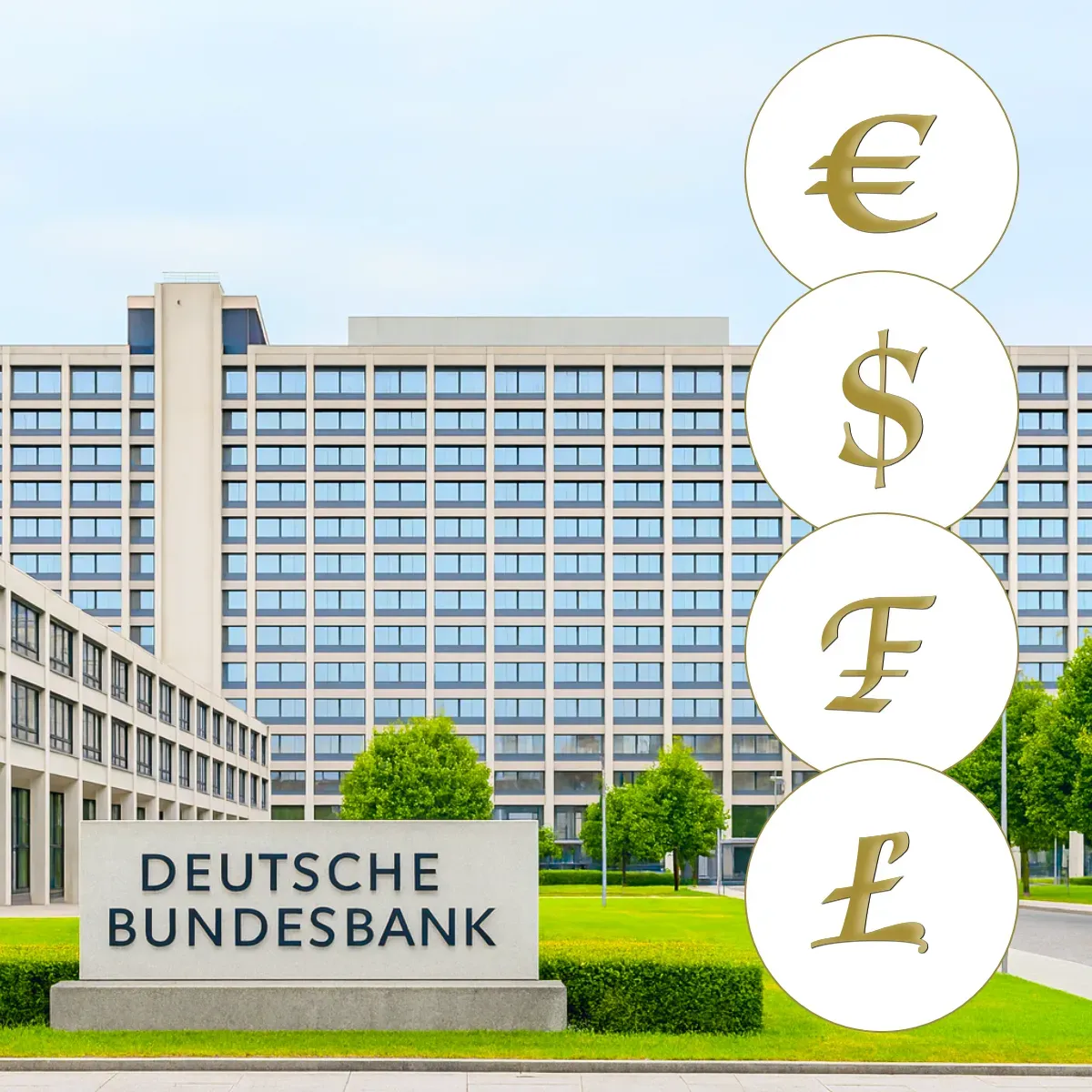
The banking system in Germany is considered one of the most stable and developed in Europe. It includes both state and private financial institutions, all working under strict rules set by the Federal Bank of Germany (Deutsche Bundesbank) and the Federal Financial Supervisory Authority (BaFin). This system keeps the financial market stable and makes people trust the banks.
Three-sector structure of the banking system
The main feature of the German banking system is the three-sector structure (Drei-Säulen-Struktur), described in official Bundestag documents 1. It has three main groups:
- Private commercial banks (Privatbanken) — the biggest banks working in the market and offering all kinds of services. This group includes Deutsche Bank, Commerzbank, HypoVereinsbank (UniCredit Bank) and some regional banks. These banks are active in international currency and investment operations.
- Public and municipal banks (Öffentlich-rechtliche Kreditinstitute) — Sparkassen (savings banks) and Landesbanken (state banks). They follow public law and have a social and regional role: they give loans to people and small businesses and make financial services available to everyone.
- Cooperative banks (Genossenschaftsbanken) — Volksbanken and Raiffeisenbanken, owned by their members. Their goal is to help each other and support local clients. The central bank for this group is DZ Bank.
This structure developed over time. At first, private banks were the main type, but in the 19th century, savings banks for people and cooperative banks for craftsmen and farmers appeared. Today, all three sectors work together and compete, giving a wide choice of banking services and keeping the system stable.
Supervision and regulation
Banking activities are controlled by two main authorities:
- Deutsche Bundesbank — checks bank reports, evaluates risks, and keeps financial stability;
- BaFin — gives licenses, makes sure banks follow the law, and controls the liquidity and capital of banks.
Both institutions work together, as described in § 7 of the Banking Act (Kreditwesengesetz, KWG) 2: Bundesbank does daily operational control, and BaFin makes legal decisions, including actions if banks break the rules.
Main things to know
Most German banks are universal (Universalbanken) — they offer all basic financial services: from deposits and loans to currency operations and international transfers. This is different from some other European countries, where banks often specialize in only one area.
Most German banks offer all basic financial services: from deposits and loans to currency operations and international transfers.
So, the German banking system is a stable, multi-level mechanism that combines market rules, government regulation, and social responsibility. Because of close cooperation between Bundesbank, BaFin, and the European Central Bank, it keeps the euro stable and makes currency operations safe for clients, including tourists and foreign residents.
Currency accounts in Germany
Currency accounts in Germany let you keep and use not only euros, but also other currencies — for example, US dollars, British pounds, or Swiss francs. These accounts are useful for people who get money from abroad, send money between countries, or want to keep their savings in different currencies. In Germany, currency accounts are available for both residents and foreigners if certain conditions are met.
How a currency account works
A normal bank account in Germany (called Girokonto) is in euros. But some banks offer multi-currency accounts (Fremdwährungskonten), where you can keep several currencies at the same time. This lets you make international transfers, receive payments from abroad, and exchange money without extra conversion to euros.
You can open such accounts in traditional banks (like Deutsche Bank or Commerzbank) or in digital fintech services, such as N26, Revolut, or Wise. Fintech services often offer better exchange rates and easy management through a mobile app.
Who needs a currency account
- Foreigners working in Germany who get paid in another currency (for example, USD or GBP);
- Tourists and immigrants who need to send money from abroad;
- Freelancers and business owners working with foreign clients;
- People who want to keep their savings in different currencies to reduce currency risks.
How to open a currency account
The process depends on the type of bank:
- Traditional banks (Deutsche Bank, Commerzbank, Sparkasse, Volksbank) require you to visit a branch in person. You need to show your passport, proof of address (Anmeldung), and sometimes proof of income or a work contract.
- Online banks and fintech services (N26, Revolut, Wise) let you open an account online with digital identification. Usually, you only need your passport and proof of address by email or video call.
After your account is activated, you can use the multi-currency interface — you can add money, transfer it, and keep currency without having to convert it to euros.
What to keep in mind
- Not all German banks offer currency accounts — they are usually available in large commercial and international banks.
- Some banks open accounts only for residents of Germany or the EU.
- There may be a monthly fee for a currency account, and currency conversion may have an extra charge above the ECB rate.
- For large transactions, the bank may ask for proof of where the money comes from (according to the anti-money laundering law — Geldwäschegesetz).
Currency transfers to and from Germany
The German banking system offers many ways to transfer money both inside the European Union and outside it. Currency transfers can be made in euros or other currencies, including US dollars, British pounds, Swiss francs, and Polish zloty. Customers can use traditional bank transfers or modern digital solutions with low fees.
Main types of transfers
German banks use several systems for transferring money depending on the currency and destination.
- SEPA — a single euro payment area 3 that includes all EU countries and almost all European countries. Such transfers are fast (1 business day) and usually free 4.
- SWIFT — an international system for transfers in other currencies (USD, GBP, etc.). It is used for sending money outside Europe, but fees are higher and it takes up to 3–5 business days 5.
- Online platforms and fintech services — modern solutions (for example, Wise, Revolut, N26, PayPal) that let you send currency abroad with low fees and at rates close to the market rate.
Comparison of transfer types
| Transfer type | Currency | Average time | Fee | Features |
|---|---|---|---|---|
| SEPA | Euro | 1 business day | 0–1 € | Fast and cheap, only for European countries |
| SWIFT | Different currencies | 2–5 days | 10–30 € | Worldwide coverage, possible extra fees from intermediary banks |
| Online platforms | Different currencies | instant – 1 day | 0.3–1% of amount | Low fee, transparent exchange rate |
How to send and receive a transfer in Germany
A bank customer can send a currency transfer by going to the bank in person and filling out a transfer form, or by using online banking or a mobile app. Usually you need to give the recipient’s IBAN and BIC, and sometimes their address. Depending on the currency and direction of transfer, you can choose who pays the bank fees: the sender or the receiver.
You can receive a currency transfer in Germany to your bank account. If the money comes in a foreign currency, the bank will automatically convert it to euros at its own rate, which may be different from the market rate. If you receive money into a currency account, conversion is not needed.
For transfers inside Europe use SEPA — it is fast, cheap, and reliable. For transfers outside the EU it is better to use fintech services with multi-currency accounts. Always check the current rate and fees before sending money.
Currency deposits in German banks
In Germany, deposits in euros are most common, but some banks also offer foreign currency deposits — accounts for keeping money in US dollars, British pounds, Swiss francs, and other currencies. Such deposits are especially interesting for foreigners, investors, and those who want to diversify their savings or earn from changes in exchange rates.
What is a currency deposit?
A currency deposit (Fremdwährungseinlage) is a deposit account that is not in euros but in a foreign currency. The customer puts money for a certain period, gets interest income, and can get the deposit back in the original currency or in euros at the rate on the closing date. Such accounts can be opened by individuals or companies.
The interest rates on currency deposits are usually lower than on euro deposits, but they can be profitable if the exchange rate changes in your favor. But you should remember there is a currency risk — changes in the exchange rate can lead to profit or loss when you convert.
Currency deposits are offered by various banks, including Commerzbank 6 and Revolut.
Interest rates and conditions
The profit from currency deposits in Germany depends on the currency and the term; it can be from 1.5% to 4% per year.
The minimum amount to open a currency deposit is usually from 1,000 units of the currency. The term is from 3 months to 5 years. Most banks allow you to close the deposit early but you may lose part of the interest.
All deposits in German banks are protected by the state deposit guarantee system (Einlagensicherung). The interest on deposits is taxed as capital income (Kapitalertragsteuer).
Frequently asked questions about currency accounts, transfers, and deposits in German banks
Can I open a currency account in a German bank if I am not a German citizen?
Yes, foreigners can open a currency or regular account in most German banks. Usually you need a passport and proof of registration in Germany (Anmeldung). Some online banks like N26, Revolut, or Wise let you open an account online without living permanently in Germany.
Which currencies are available for accounts and deposits in Germany?
Apart from euros, German banks offer services in US dollars (USD), British pounds (GBP), and Swiss francs (CHF). Online banks have a wider list — up to 50 currencies, including many European ones.
What is Festgeld and how is it different from a regular account?
Festgeld is a fixed-term deposit with a fixed rate and period. Money is put for a certain time (for example, 6 or 12 months) and gives stable income. Different from a current account (Girokonto), you cannot take out money before the end of the term without losing interest.
Can I open a currency deposit in dollars or pounds?
Yes, such deposits are offered by large banks like Commerzbank. The interest rates may be different from euro deposits, but they let you diversify your savings and protect them from euro exchange rate changes.
How can I transfer money abroad from Germany?
Transfers within Europe are done through SEPA — fast (1 business day) and almost free. For international transfers in other currencies, the SWIFT system is used; it takes up to 3–5 days and costs from 10 to 30 €. Modern fintech services like Wise and Revolut often offer better conditions and market exchange rates.
How much does a SEPA or SWIFT transfer cost?
SEPA transfers within the EU in euros are usually free. SWIFT transfers in other currencies (USD, GBP, etc.) cost more — from 10 to 30 €, depending on the bank and destination country. Fees may also be charged by intermediary banks.
Can I receive a transfer from abroad in foreign currency?
Yes, you can receive currency transfers into any German account. The bank will convert the money into euros at its own rate if your account is not multi-currency. If it is a currency account (for example, USD or GBP), the money is credited without conversion.
How are deposits protected in German banks?
All deposits in Germany are insured up to 100,000 € per client per bank (Einlagensicherung). Large banks like Deutsche Bank and Commerzbank also participate in private funds for extra protection.
What taxes do I have to pay on currency deposits?
The income from deposits is taxed as capital gains (Kapitalertragsteuer) — 26.375%. The bank usually withholds this tax automatically, but in some cases you can apply for partial exemption.
Information sources
- Banking System and Financial Supervision in Germany. German Bundestag
- German Banking Act (KWG). Federal Office of Justice
- Single Euro Payments Area (SEPA). European Central Bank
- SEPA transfer fees. Deutsche Bundesbank
- List of Prices and Services. Deutsche Bank
- Fixed-term deposits. Commerzbank
Author team wechselkurse-vergleich.de
Last updated:
Foreign Currency Accounts, Deposits and Transfers in German Banks