What is the currency in Germany now: euro, symbol and banknotes
Germany is a country where the official currency today is the euro (EUR). On this page, you will find information about the symbol €, the banknotes and coins in use, how to pay in Germany, and what happened to the German mark after the euro was introduced.
Current currency in Germany
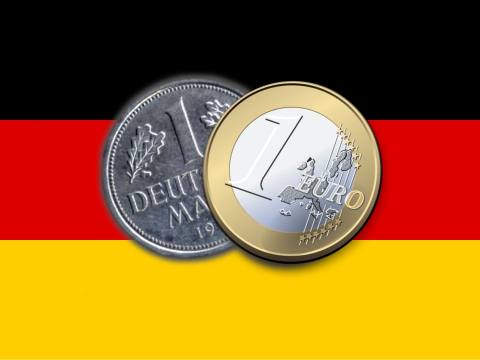
Coins: euro and German mark; money in Germany in the past and today
Since January 1, 2002, the official money in Germany is the euro (EUR, €). But it is more correct to say it is not a national currency, but a single European currency. The euro was introduced as part of the European Monetary Union (EMU), which brings together EU countries for money policy. The euro is issued by the European Central Bank together with the national central banks, including Deutsche Bundesbank.
The euro is used not only in Germany, but also in all eurozone countries that have accepted it as their official currency. Today there are 20 countries using the euro, including France, Italy, Spain, the Netherlands, Austria and others. Also, the euro is used outside the EU — for example, in Kosovo and Montenegro, even though these countries are not officially in the eurozone.
Today, the euro is one of the main world currencies along with the US dollar. It is important in international payments, currency reserves, and world trade. The euro is used as a currency for payments and as a reserve currency in different countries, which shows its importance not only for Europe, but for the whole world financial system.
The official currency in Germany is the euro (EUR, €). The euro is not a national, but a single European currency.
Euro symbol and code
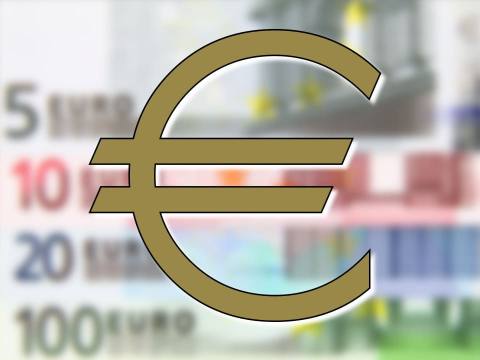
The euro symbol €, the single European currency in Germany
The euro is shown with the special symbol €, which was chosen in 1996 and stands for the first letter of "Europe". In international payments, the code EUR is used according to ISO 4217. These marks are used in all financial documents, bank operations, and stock quotes.
Main euro symbols
| Symbol | Meaning |
|---|---|
| Symbol | € |
| ISO 4217 code | EUR |
| Name | Euro |
| Issuer | ECB (European Central Bank) |
So, when you pay in Germany or other eurozone countries, you will always see EUR or the symbol €, which clearly means the single European currency.
Switch from German mark to euro
Before the euro was introduced in 2002, the national currency of Germany was the German mark (in German: Deutsche Mark). It was used from 1948 and was one of the most stable currencies in Europe in the second half of the 20th century. The small unit was the pfennig (Pfennig), where 1 DM = 100 Pf.
The German mark had different short names: DM, DEM (official ISO 4217 code), D-Mark, or just Mark or Deutschmark. In everyday life, people usually said DM.
After the euro was introduced, the German mark slowly stopped being used. But Deutsche Bundesbank still accepts mark banknotes and coins and exchanges them for euros at a fixed rate of 1 EUR = 1.95583 DEM. So, the old currency did not lose its value completely and can still be exchanged.
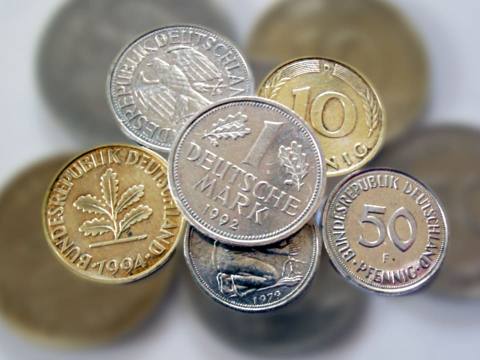
Coins: German mark and pfennig
Euro banknotes: values and design
In Germany and all eurozone countries, the following euro banknotes are used: 5 €, 10 €, 20 €, 50 €, 100 €, 200 € and 500 €. Each note has its own color and size, which makes them easy to tell apart. All euro banknotes are legal money in all eurozone countries.
The design of the notes was chosen to show European unity. On the front there are windows and gates, showing openness and cooperation. On the back there are bridges, showing connection between people. The buildings are not real — they are made up, but look like different historical styles.
Main values of euro banknotes
| Value | Color | Images |
|---|---|---|
| 5 € | Grey | Classical architecture |
| 10 € | Red | Romanesque style |
| 20 € | Blue | Gothic architecture |
| 50 € | Orange | Renaissance |
| 100 € | Green | Baroque and rococo |
| 200 € | Yellow-brown | Modern architecture |
| 500 € | Purple | Contemporary architecture |
Although the 500 € note is still legal money, the European Central Bank has stopped making it and is removing it from use. The main notes for daily payments in Germany are 5 €, 10 €, 20 € and 50 €.
Each note has modern security features — watermarks, holograms, microprinting, and special paper. This makes it very hard to fake and keeps the euro safe as a currency.
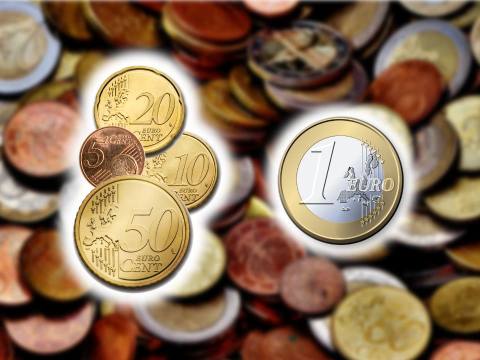
Cents are the small coins of the euro in Germany.
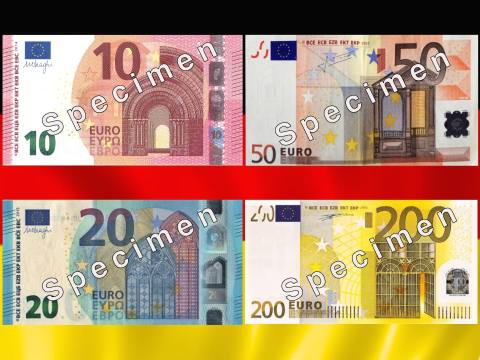
Euro banknotes: value and design of 10, 20, 50, 200 euro notes
Coins and small change
The small unit of the euro is the cent. The ratio is 1 euro = 100 cents. In Germany and all eurozone countries, coins of these values are used:
Euro coin values
| Value | Design (common side) | Design (national side in Germany) |
|---|---|---|
| 1, 2 and 5 cents | Globe with Europe and Africa | Oak leaves (traditional German symbol) |
| 10, 20 and 50 cents | Map of Europe | Brandenburg Gate (Berlin) |
| 1 and 2 euros | Map of Europe | Federal eagle — symbol of Germany |
All coins have two sides: on the common side there are symbols of united Europe, and on the national side each eurozone country has its own designs. In Germany these are oak leaves, Brandenburg Gate, and the federal eagle.
Euro coins are made by the European Central Bank together with national mints. Because of a single standard, they are accepted in all eurozone countries no matter where they were made.
Conclusion
Today, the only official currency in Germany is the euro (EUR, €). It is used everywhere: from daily shopping to international payments. The euro unites 20 eurozone countries and is the second most important currency in the world after the US dollar.
For tourists and people living in Germany, it is important to remember that you can only pay with euros, but you can still exchange old German marks at the Bundesbank if you want. So, the euro is not only a symbol of European unity, but also an important part of the world financial system.
Questions and answers
What currency is used in Germany now?
Euro.
Do they accept dollars or pounds in Germany?
No, only euros are accepted. Other currencies must be exchanged.
Can you pay in Germany with the old currency — the German mark?
No, but you can still exchange marks at the Bundesbank at a fixed rate (see above).
Can you pay with cryptocurrency in Germany?
No, the official currency is only euro, but in some places they might accept bitcoin or other currencies — this is rare.
Is it better to keep money in Germany in euros or dollars?
For daily expenses it is better to keep money in euros, because dollars are not accepted for payment. The dollar is used more as an investment or reserve currency.
What to do with damaged euro banknotes?
You can exchange very worn or damaged notes at a bank.
Information sources
- Euro, General Information. Federal Ministry of Finance
- German Federal Bank
- European Central Bank
Author team wechselkurse-vergleich.de
Last updated:

National and single European currency in Germany